Controlling linear motion is a common requirement in the development of medical equipment and laboratory equipment, and design engineers can choose from many linear drives. However, the nature of medical/laboratory applications presents unique challenges, such as ensuring precise, reliable and repeatable movements. Deal with changing dynamic loads in smaller and smaller spaces; operate in a clean environment that requires minimal wear debris; and reduce instrument noise, vibration and mechanical interference during operation.
In order to meet these challenges, designers of medical/laboratory equipment mainly choose precision ball screws for linear motion control, because they have the necessary performance characteristics, have undergone durability testing, and can provide a variety of requirements to meet these special needs Size/style options. Therefore, ball screws are an indispensable part of many blood extraction equipment in automatic sample transfer systems in many medical equipment and laboratory environments. In short, ball screws have become the preferred linear motion control solution for medical/laboratory applications.
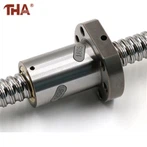
At the most basic level, the ball screw includes a screw, a nut and a ball bearing reset mechanism, all of which are packaged in a component. When driven by a motor, the component converts rotational motion into linear motion and controls the connection Linear positioning of objects (whether it is a workbench, platform, pump actuator, sample holder, etc.). The screw has a spiral groove along the length of the shaft, and the nut has a matching groove. These grooves act as inner and outer rings, and precision metal balls travel along these inner rings to produce linear motion. Ball screws are more efficient than other types of linear control screws, have a lower coefficient of friction and support better torque control, making them more suitable for the challenges inherent in medical applications. For example, by performing torque control in both the driving direction and the driven direction, the ball screw can achieve better position control in applications where the load direction is reversed (such as piston metering systems).